
What does “complete protein” mean?
Proteins are built from amino acids. Nine of them are called essential because the body cannot make them, so they have to come from food. A complete protein provides all nine. Harvard’s Nutrition Source describes soy as a complete protein, which is one reason soy foods are a staple in vegetarian and vegan cooking.
How are the main soy foods made?
Edamame
Edamame are young green soybeans, usually sold frozen, in or out of the pod. You boil or steam them and eat them as a snack or add them to bowls.
Soybeans
Mature soybeans are dried, then soaked and boiled like other beans. They are also the starting point for soy milk, tofu, tempeh and soy flour.
Tofu
Tofu is made by curdling soy milk and pressing the curds into blocks. The coagulant appears on the label; USDA’s firm tofu entry, for example, is made with calcium sulfate. Tofu ranges from silken to extra firm, and firmer tofu has less water.
Tempeh
Tempeh is made by fermenting cooked soybeans into a firm, sliceable cake. It has a dense texture and a nutty flavour.
Textured soy protein (TVP or soy mince)
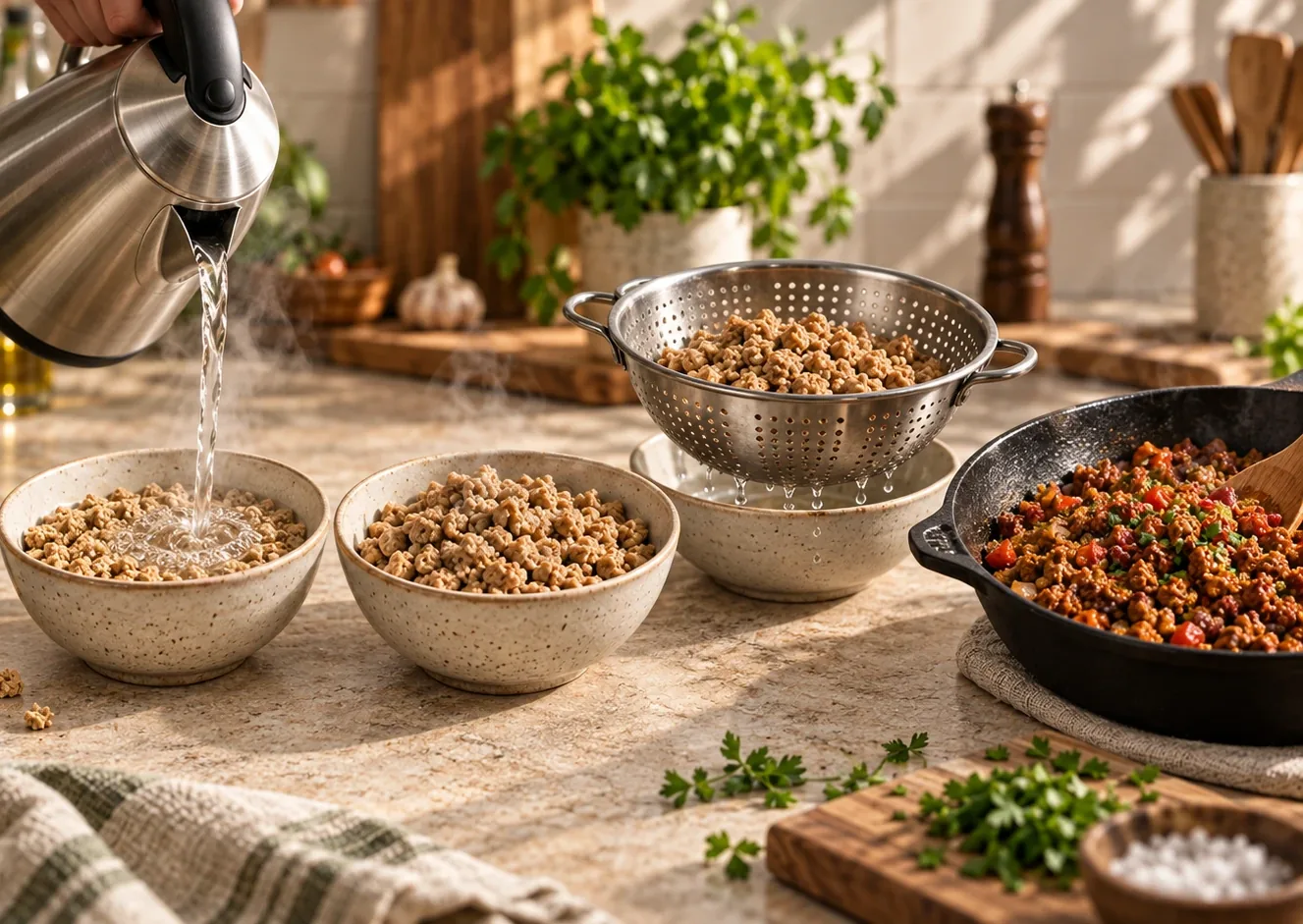
TVP is a dry, textured soy product. Bob’s Red Mill’s TVP lists a single ingredient, defatted soy flour, and its Nutrition Facts list 12 g of protein in a 1/4 cup (23 g) serving. It keeps in the pantry and is rehydrated with boiling water or stock before cooking.
Soy chunks and soy steaks
Soy chunks and steaks are larger dry textured soy pieces. They are soaked or simmered until soft, squeezed, and then used in curries, stir-fries and bowls. VEGIE’s Chunks and Steaks are range concepts built around these formats.
How much protein is in each type of soy food?
| Soy food | State | Protein per 100 g | FDC ID |
|---|---|---|---|
| Soy flour, defatted (TVP’s ingredient) | Dry | 51.5 g | 174275 |
| Tempeh | As sold | 20.3 g | 174272 |
| Soybeans | Boiled | 18.2 g | 174271 |
| Tofu, firm (calcium sulfate) | As sold | 17.3 g | 172475 |
| Edamame | Prepared | 11.9 g | 168411 |
| Tofu, regular | As sold | 8.08 g | 172476 |
Dry and ready-to-eat weights are not directly comparable, because dry TVP absorbs liquid before you eat it. Our protein per serving guide converts these figures into example servings.
Is soy protein suitable for everyone?
No. Soy is one of the allergens that must be declared on food labels in Australia and New Zealand, according to FSANZ. Anyone with a soy allergy should avoid soy foods, and anyone with a medical condition should ask a doctor or dietitian about their diet. We do not make health claims about soy or about VEGIE.
How do you cook with soy protein?
- TVP: pour boiling water or stock over it and stand for 5 to 10 minutes. Bob’s Red Mill uses 3/4 cup plus 2 tablespoons of liquid per cup of TVP. Then brown it and add it to sauces, as in our soy mince bolognese.
- Soy chunks: soak or simmer until soft, squeeze well, then fry or simmer them in a sauce, as in our soy chunk coconut curry.
- Tofu: drain and press firm tofu, then cube, slice or crumble it and fry until golden.
- Tempeh: slice it thinly and pan-fry or glaze it.
- Edamame: boil or steam from frozen and add to bowls, salads and stir-fries.
Where does VEGIE fit in?
VEGIE is a pantry-food brand in development around dry textured soy protein. VEGIE Mince is the first physical prototype direction. It is not for sale, and its final ingredients, nutrition and preparation are still being verified, so we use generic soy products in our recipes.