
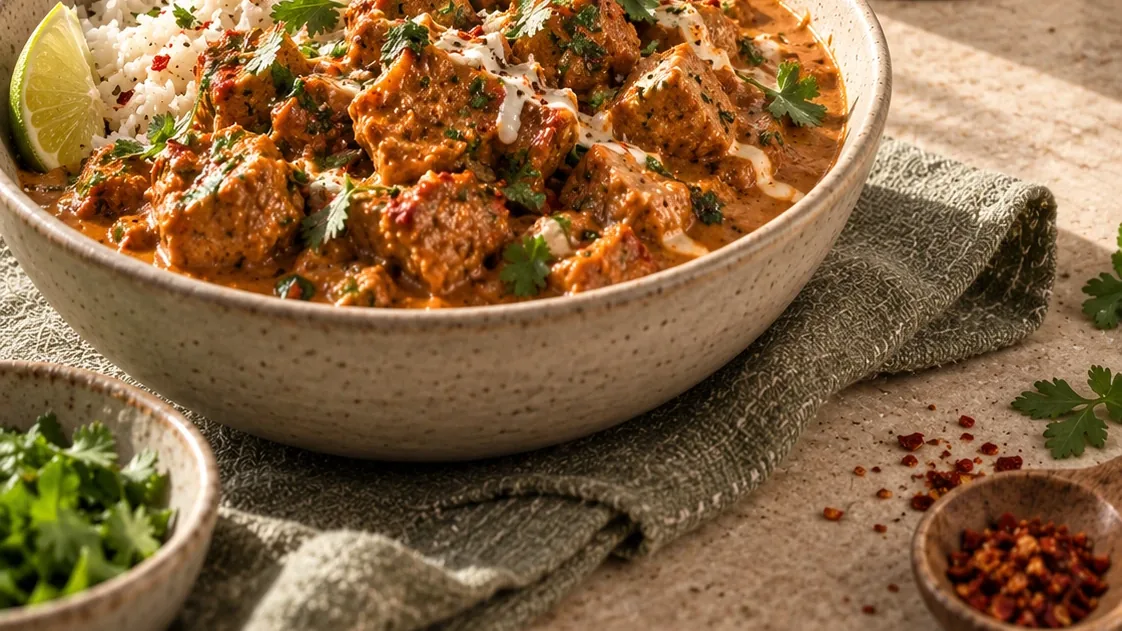
What makes a vegetarian meal high in protein?
A high-protein vegetarian meal usually has three parts: a concentrated protein food, a second protein source such as legumes, and the carbohydrates and vegetables that make it a full plate. Soy foods are the most concentrated option for most home cooks, which is why most of the ideas below start with TVP, tofu or tempeh.
How much protein you need depends on your body and circumstances. For context, Harvard’s Nutrition Source cites the Recommended Dietary Allowance of 0.8 g of protein per kilogram of body weight per day for adults. If you have specific health or training goals, ask a dietitian.
Which plant foods have the most protein per 100 g?
These figures are from USDA FoodData Central (SR Legacy). Note the state of each food: dry TVP and its base ingredient, defatted soy flour, are weighed dry, while beans and lentils are weighed cooked.
| Food (state) | Protein per 100 g | FDC ID |
|---|---|---|
| Soy flour, defatted (the ingredient in TVP), dry | 51.5 g | 174275 |
| Peanut butter, smooth | 22.2 g | 172470 |
| Tempeh | 20.3 g | 174272 |
| Soybeans, boiled | 18.2 g | 174271 |
| Tofu, firm, made with calcium sulfate | 17.3 g | 172475 |
| Lupins, boiled | 15.6 g | 172424 |
| Egg, whole, raw (vegetarian, not vegan) | 12.6 g | 171287 |
| Edamame, prepared | 11.9 g | 168411 |
| Lentils, boiled | 9.02 g | 172421 |
| Black beans, boiled | 8.86 g | 173735 |
| Tofu, regular | 8.08 g | 172476 |
Peanut butter is dense in protein but is usually eaten in small amounts, so it works best as a sauce or topping. For realistic serving sizes, see protein per serving in vegetarian foods.
10 high-protein vegetarian meal ideas
1. Soy mince bolognese
Dry TVP rehydrated in stock and simmered in a tomato sauce. Our soy mince bolognese recipe uses 2 cups of dry TVP for 4 serves.
2. Soy mince tacos
Browned, spiced TVP in small tortillas with lettuce, tomato and avocado. Full method in our soy mince tacos recipe.
3. One-pot soy mince chilli with two kinds of beans
TVP, kidney beans and black beans in one pot, so two protein sources share the work. See the one-pot soy mince chilli.
4. Soy chunk coconut curry
Soaked soy chunks simmered in coconut milk and tomato. Recipe: soy chunk coconut curry.
5. Soy chunk stir-fry
Crisped soy chunks with broccoli and capsicum in a ginger soy sauce. Recipe: soy chunk stir-fry.
6. Seared soy steak or tofu grain bowl
Glazed, seared soy pieces or firm tofu over brown rice with roasted sweet potato. Recipe: seared soy steak grain bowl.
7. Tempeh and edamame rice bowl
Slice tempeh, pan-fry it until golden and glaze it with soy sauce and maple. Serve it with rice, shelled edamame, shredded cabbage and a squeeze of lime, so two soy foods share the bowl.
8. Crispy tofu and lentil salad
Toss cubes of pressed firm tofu in a little cornflour and pan-fry them. Combine them with cooked lentils, rocket, cherry tomatoes and a mustard dressing for a salad that holds up for lunch.
9. Tofu and black bean breakfast wraps
Crumble firm tofu into a pan with cumin, turmeric and black beans, then roll it into tortillas with salsa. It is vegan as written; vegetarians can add a scrambled egg.
10. Peanut noodles with edamame and tofu
Whisk peanut butter with soy sauce, lime and warm water into a sauce, then toss it with noodles, edamame, cucumber and seared tofu.
How do you add protein to a vegetarian meal without meat substitutes?
- Add a legume. Stir lentils, black beans or chickpeas into soups, salads and sauces.
- Use edamame. Shelled edamame adds 11.9 g of protein per 100 g, according to USDA, to bowls and stir-fries.
- Make a nut-butter sauce. Peanut butter thinned with soy sauce and lime dresses noodles and vegetables.
- For vegetarians, add eggs. USDA lists a whole raw egg at 12.6 g of protein per 100 g.
- Use tofu as a base. Silken tofu can be blended into sauces and dressings; firm tofu can be crumbled, cubed or sliced.
Is soy protein a complete protein?
Yes. Harvard’s Nutrition Source describes soy as a complete protein, meaning it provides all nine essential amino acids. For how each soy food is made and how they compare, read what soy protein is and TVP vs tofu vs tempeh.
What should I check before cooking with soy?
Soy is one of the allergens that must be declared on food labels in Australia and New Zealand, as FSANZ explains. None of these meals suits someone with a soy allergy unless you swap the soy for legumes.